How to Find Creative Inspiration in a Small Italian Town: A Local Guide
Arrive in a small Italian town on a Tuesday morning and nothing happens for about twenty minutes. The bar opens. A man sweeps the pavement in front of the bakery with a broom that has lost half its bristles. A scooter passes and does not come back. Then you look up and see the butcher's sign: hand-painted decades ago, repainted twice, the letter S never quite as tall as its neighbours. That sign will give you more to work with than most galleries. This is a guide to finding that kind of material on purpose, rather than waiting to be entertained by a place that has no intention of entertaining you.
Start With One Square Metre
Most visitors scan a town. You want to read it. The difference is a matter of distance, and the fastest way to close it is to stop moving.
Choose a single square metre of the centre — a doorway, a stretch of kerb, the corner of the fountain — and stand there for ten minutes. Not five. Ten is where the ordinary details run out and the odd ones begin. Write down twenty things you can see from where you stand. Do not filter. The first eight will be dull: a bin, a cable, a step. The last eight are the ones you will use.
On a good day you might catch: a stone step worn into a shallow dip by a century of feet, the iron ring still set into the wall for tying horses, two different greens where a shutter was repainted in stages, a handwritten sticker on the letterbox that says the owner is away until Thursday. Each of those is a story, a pattern, a texture or a piece of characterisation. You are not collecting souvenirs. You are collecting evidence.
Follow the Town's Clock, Not Yours
Small towns keep a schedule so fixed you could set a watch by it, and that schedule is the most useful creative tool on offer. Return to the same spot at different hours and the same street stops being scenery and becomes a scene.
At seven, the bar smells of hot metal and ground coffee, and the espresso machine hisses like something alive. By ten the market is being folded away — crates stacked, awnings rolled, the last of the greens going cheap. At one o'clock the shutters come down and the town goes quiet enough to hear a radio two streets away. Around five the piazza fills again for the evening walk, and by eight the air smells of frying oil and someone's tomato sauce.
Pick one of those hours. Go back to it three days running. Note what changes: who stands where, who is late, who takes the same route and who never appears again. Specific, repeated observation is where ideas actually come from — not from waiting for a flash of insight, which tends not to arrive in towns with one traffic light.
Read What the Town Prints
Italy is a country that still puts things on paper, and a small town is a wall of it. Posters for the patron saint's festival layered three deep on a noticeboard, each year's overlapping the last. A chalkboard outside a trattoria with the day's menu in sloping capitals and a spelling mistake nobody has corrected. A note taped to a pole about a lost cat, with a description so detailed it tells you more about the owner than the cat.
Spend an hour doing nothing but reading. Photograph signs you like, then sit down with a notebook and copy three of them by hand — not to reproduce them, but to feel how the letters are built. Look for the places where printing gives up and handwriting takes over: the price change on a menu, the opening hours amended in pen, the name of the new owner written over the old one on a shop front. That layered, imperfect lettering is a language of its own, and it can shape a poster, a book cover, a logo for something you have not invented yet.
Take Rubbings, Not Only Photographs
Photographs flatten texture. A pencil and a sheet of thin paper do the opposite. Carry both. Lay the paper over a surface and rub the side of the pencil across it, and you get the actual grain of the thing: the pitted iron of a drain cover, the ridged glass of a bar door, the roughness of a plastered wall that has been patched four times.
Four texture errands worth doing in any town:
- A wooden shutter, closed and sun-blistered, taken at the level of your shoulder rather than your eye.
- A stone threshold at the entrance to a church or an old shop, where the middle has been worn smooth and the edges have not.
- A metal grate or manhole cover, for the geometry and the raised lettering naming the foundry.
- A patch of pavement under a café awning, then the same pavement in full sun, to see how the light changes the surface.
Keep a folder for paper things too: a bus ticket, a bakery bag, a seed packet from the market, a torn festival flyer. They cost nothing and they carry colour, weight and typography you would never think to invent.
Listen for the Local Script
Dialect, gestures, and the way people greet each other are the most portable material in the town. Sit at a bar counter rather than a table and you will hear the same six phrases all morning, delivered differently each time. Note them. Note the pauses. Note that a shrug here carries three distinct meanings and the hand does most of the work.
Be a good guest while you do it: order something, say good morning, ask the person behind the counter about the shop that has been closed for years — people are usually glad to tell you, and the answer will be better than anything you could make up. Do not photograph or record people without asking. If you want to use a phrase someone said, write it down and leave the person out of it.
Give Yourself Constraints, Not Goals
"Find inspiration" is a wish. "Note one door handle a day" is a task, and tasks get done. Constraints make observation specific enough to be useful, and they stop you from drifting around a piazza hoping something will happen to you.
Try one constraint at a time: only one colour per day, and nothing else; three pieces of overheard conversation, written down within a minute of hearing them; a single street walked five times at five different hours; one object photographed from twenty angles. When you get home with thirty small, specific notes, you will have more than enough to work from. Vague impressions fade in a week.
What to Carry Home
A short routine, easy to run in any town for a few days:
- Morning: one coffee standing at the bar, one page of notes about what you see and hear.
- Midday: one rubbing, one copied sign, or one photograph of a detail nobody else would photograph.
- Evening: a slow walk on the same route, with one question in mind — who is missing from this street tonight?
- Before bed: reread the day's notes and circle the three details that still feel alive.
The circled details are your raw material. Back at a desk, put two of them next to each other — the worn step and the note about the lost cat, the shutter green and the six phrases from the bar — and see what they have to say. Ideas rarely arrive whole in a piazza. They arrive later, when you have given them something specific and slightly strange to attach to.
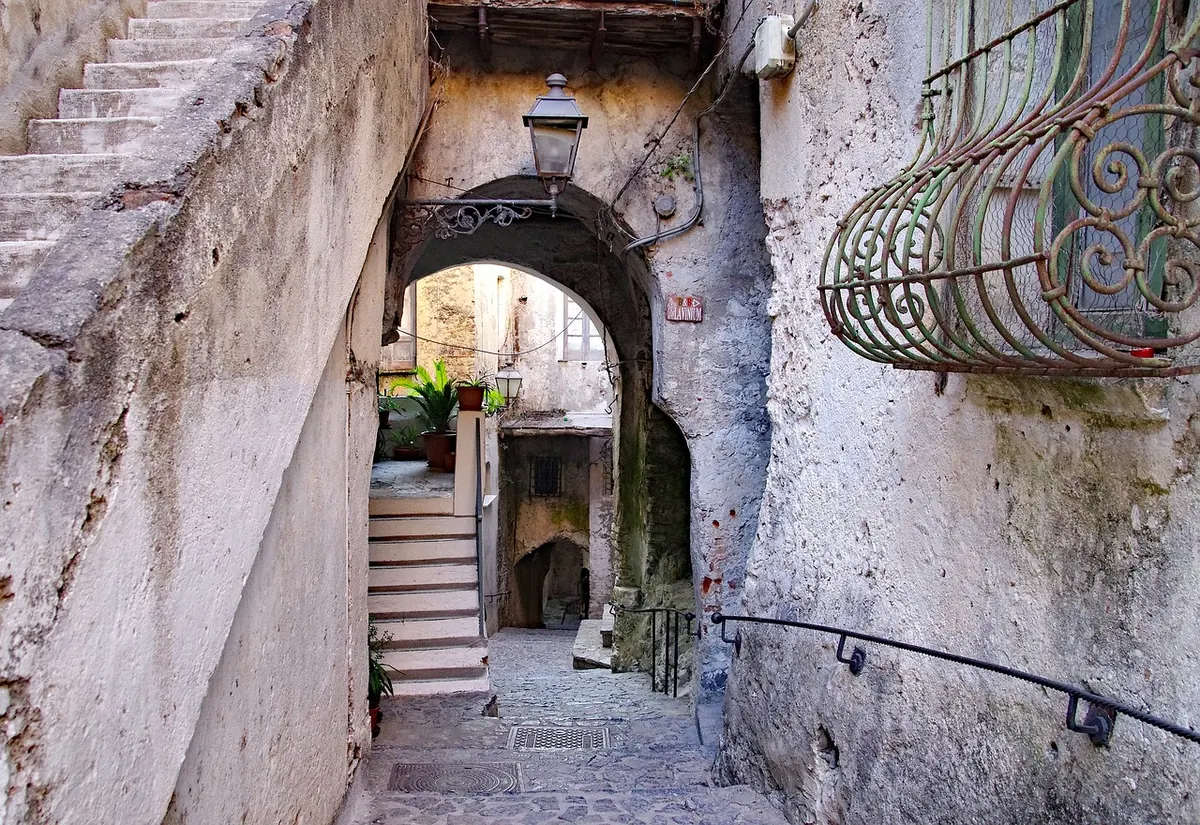
Photo: valtercirillo / Pixabay